

-
Learning by doing
-
Trainers with practical experience
-
Classroom training
-
Detailed course material
-
Clear content description
-
Tailormade content possible
-
Training that proceeds
-
Small groups
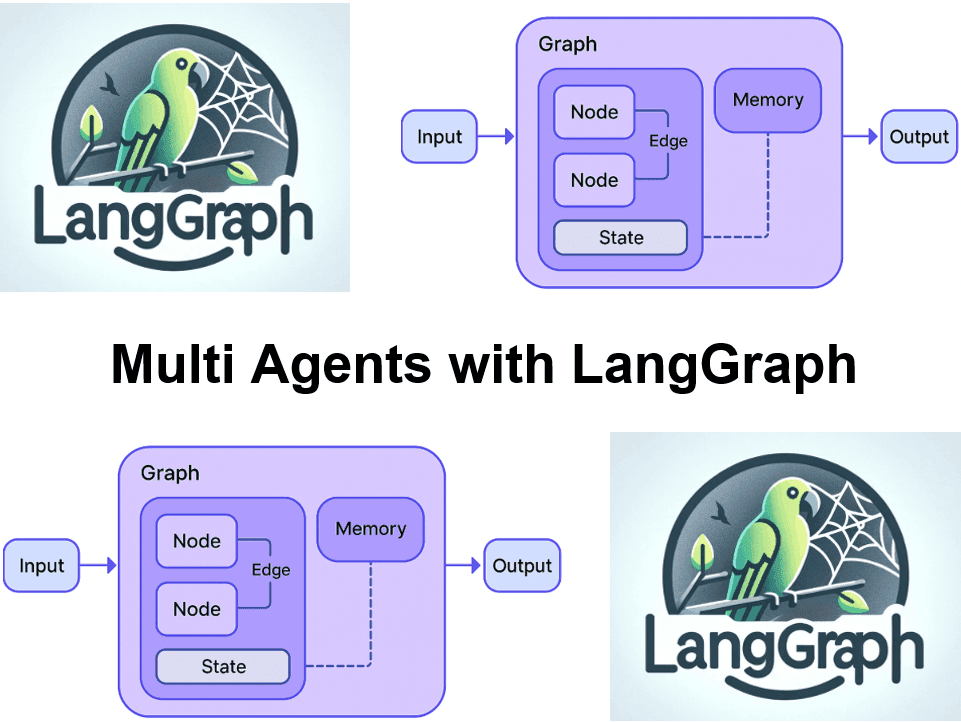
The course Multi Agents with LangGraph from SpiralTrain teaches you how to design and build sophisticated multi-agent AI systems using LangGraph. You will learn how to orchestrate multiple autonomous agents, manage complex workflows, implement state machines, and create production-ready agentic applications that collaborate to solve challenging problems.
The course Multi Agents with LangGraph begins with a comprehensive introduction to LangGraph, exploring how it differs from traditional agent frameworks. Graph-based architectures, StateGraph concepts, nodes, edges, and conditional routing are discussed.
This module covers essential graph theory concepts including directed graphs, state machines, and different node and edge types. Participants learn about entry points, conditional edges, cyclic graphs, and techniques for graph compilation and visualization.
State management in LangGraph is explored in depth, covering state schema definition using TypedDict, state updates, reducers, and immutability. The module addresses checkpointing, state persistence, restoration, and debugging techniques.
Here participants learn to build agent nodes with tool-calling capabilities using the ReAct pattern. Topics include custom agent logic, agent state management, error handling, monitoring, testing, and established best practices for robust agent development.
This part focuses on architectural patterns for multi-agent systems including hierarchical structures, supervisor patterns, and manager-worker configurations. Sequential, parallel, and collaborative agent patterns are explored along with orchestration strategies.
Communication between agents is addressed through message passing, shared state, and handoff mechanisms. The module covers communication protocols, event systems, inter-agent messaging, state broadcasting, and synchronization techniques.
Complex workflow patterns are introduced including human-in-the-loop systems, approval workflows, and branching logic. Topics include loop detection, retry mechanisms, fallback strategies, subgraphs, and workflow composition for sophisticated multi-agent applications.
Deployment considerations are covered with focus on the LangGraph API, scaling strategies, and streaming responses. The module addresses persistence backends, checkpoint storage, cloud deployment options, and cost optimization for production environments.
This course is intended for AI engineers, software developers, and data scientists who want to build multi-agent systems using LangGraph and orchestrate AI workflows.
Participants should have Python skills and understanding of LLMs and AI agents. Familiarity with LangChain, graph theory, and asynchronous programming is beneficial.
The training combines theoretical instruction with hands-on exercises guided by an expert trainer. Participants build real multi-agent systems throughout the course.
After successful completion, participants receive a certificate of participation in Multi Agents with LangGraph.
Module 1: Introduction LangGraph |
Module 2: Graph Fundamentals |
Module 3: State Management |
|
LangGraph Overview Agents vs Workflows Graph-Based Architecture StateGraph Concepts Nodes and Edges Conditional Routing LangGraph vs LangChain Use Cases Installation and Setup Development Environment |
Graph Theory Basics Directed Graphs State Machines Node Types Edge Types Entry Points Conditional Edges Cyclic Graphs Graph Compilation Graph Visualization |
State in LangGraph State Schema Definition TypedDict States State Updates State Reducers Immutable State State Persistence Checkpointing State Restoration State Debugging |
Module 4: Building Agents |
Module 5: Multi-Agent Patterns |
Module 6: Agent Communication |
|
Agent Nodes Tool-Calling Agents ReAct Pattern Agent Executors Custom Agent Logic Agent State Error Handling Agent Monitoring Agent Testing Agent Best Practices |
Hierarchical Agents Supervisor Pattern Manager-Worker Pattern Sequential Agents Parallel Agents Collaborative Agents Competitive Agents Specialized Agents Agent Orchestration Design Patterns |
Message Passing Shared State Agent Handoffs Communication Protocols Event Systems Inter-Agent Messages State Broadcasting Conflict Resolution Synchronization Communication Debugging |
Module 7: Advanced Workflows |
Module 8: Production Deployment |
Module 9: Real-World Applications |
|
Complex Workflows Human-in-the-Loop Approval Workflows Branching Logic Loop Detection Retry Mechanisms Fallback Strategies Subgraphs Workflow Composition Performance Optimization |
LangGraph API Deployment Strategies Scaling Considerations Streaming Responses Persistence Backends Checkpoint Storage Cloud Deployment Monitoring Solutions Cost Optimization Production Best Practices |
Customer Support Systems Research Automation Code Review Agents Data Analysis Workflows Content Generation Pipelines Decision Support Systems Process Automation Testing Frameworks Case Studies Capstone Project |
These companies already made use of our courses:
These companies used our courses: