


-
Learning by doing
-
Trainers with practical experience
-
Classroom training
-
Detailed course material
-
Clear content description
-
Tailormade content possible
-
Training that proceeds
-
Small groups
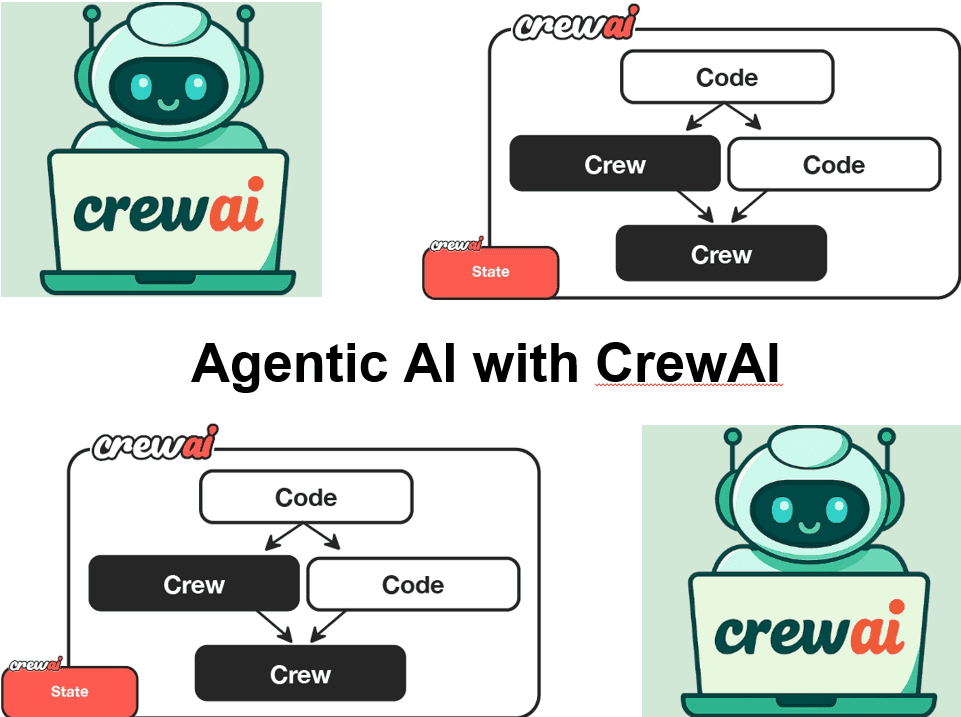
The course Agentic AI with CrewAI from SpiralTrain teaches you how to build sophisticated multi-agent AI systems using the CrewAI framework. You will learn how to create autonomous agents with specialized roles, orchestrate collaborative workflows, integrate tools and APIs, and develop production-ready agentic applications that solve complex business problems through agent collaboration.
The course Agentic AI with CrewAI begins with an overview of CrewAI and multi-agent concepts. Installation, core components, agent basics, crew structure, task fundamentals, process types, and sequential workflows are explored.
This module covers designing effective agents including defining roles, goals, backstories, creating specialized agents, delegation strategies, autonomy levels, agent memory, personality design, communication styles, and agent development best practices.
Here participants learn task definition including descriptions, expected outputs, dependencies, context management, callbacks, error handling, validation, asynchronous tasks, and optimization strategies for efficient workflow execution.
This part focuses on integrating tools including built-in tools, custom tool creation, API integration, search capabilities, file operations, database access, web scraping, code execution, error handling, and tool best practices.
Advanced orchestration patterns are addressed including hierarchical processes, manager agents, conditional workflows, parallel execution, dynamic crew building, agent handoffs, workflow branching, optimization, and complex orchestration patterns.
Memory management is explored covering short-term and long-term memory, entity memory, conversation history, storage solutions, retrieval strategies, context management, optimization, shared knowledge systems, and state persistence.
Deployment considerations include strategies, environment configuration, API development, monitoring, logging, error recovery, performance optimization, cost management, security, testing strategies, and production deployment checklists.
Practical applications are covered including research automation, content generation, data analysis, customer service, marketing campaigns, business intelligence, process automation, decision support systems, industry-specific solutions, and case studies.
The course concludes with advanced subjects including human-in-the-loop systems, guardrails implementation, quality assurance, agent evaluation, prompt optimization, LLM integration, CrewAI ecosystem, troubleshooting, future trends, and capstone project.
This course is intended for AI developers, software engineers, and data scientists who want to build multi-agent AI systems using CrewAI.
Participants should know Python programming and understand of AI and LLM concepts. Familiarity with prompt engineering and API integration is beneficial.
The training combines theoretical instruction with hands-on labs guided by a trainer. Participants build real multi-agent systems throughout the course.
After successful completion, participants receive a certificate of participation in Agentic AI with CrewAI.
Module 1: CrewAI Fundamentals |
Module 2: Agent Design |
Module 3: Tasks and Workflows |
|
CrewAI Overview Multi-Agent Concepts Installation and Setup Core Components Agent Basics Crew Structure Task Fundamentals Process Types Sequential Workflows Best Practices |
Agent Roles Agent Goals Agent Backstory Specialized Agents Agent Delegation Autonomy Levels Agent Memory Agent Personality Communication Styles Agent Best Practices |
Task Definition Task Description Expected Output Task Dependencies Task Context Task Callbacks Error Handling Task Validation Async Tasks Task Optimization |
Module 4: Tools Integration |
Module 5: Advanced Orchestration |
Module 6: Memory Systems |
|
Built-in Tools Custom Tool Creation API Integration Search Tools File Operations Database Access Web Scraping Code Execution Tool Error Handling Tool Best Practices |
Hierarchical Process Manager Agents Conditional Workflows Parallel Execution Dynamic Crew Building Agent Handoffs Workflow Branching Process Optimization Complex Orchestration Workflow Patterns |
Short-Term Memory Long-Term Memory Entity Memory Conversation History Memory Storage Memory Retrieval Context Management Memory Optimization Shared Knowledge State Persistence |
Module 7: Production Deployment |
Module 8: Real-World Applications |
Module 9: Advanced Topics |
|
Deployment Strategies Environment Configuration API Development Monitoring and Logging Error Recovery Performance Optimization Cost Management Security Considerations Testing Strategies Production Checklist |
Research Automation Content Generation Data Analysis Customer Service Marketing Campaigns Business Intelligence Process Automation Decision Support Industry Solutions Case Studies |
Human-in-the-Loop Guardrails Implementation Quality Assurance Agent Evaluation Prompt Optimization LLM Integration CrewAI Ecosystem Troubleshooting Future Trends Capstone Project |
These companies already made use of our courses:
These companies used our courses: